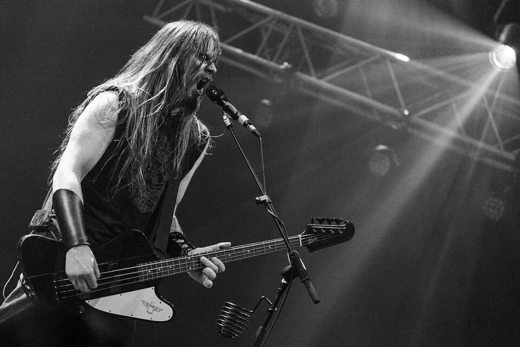
Metsatöll
Estonian heavy metal band fusing ancient folk with modern metal.
Metsatöll is an Estonian heavy metal band formed in 1999. Their music blends heavy metal with ancient Estonian folk instruments and themes, drawing on the wars for independence of the 13th and 14th centuries. The band's name is a euphemism for 'wolf' or 'werewolf' in Western Estonia.
- formed
- 1999
- origin
- Estonia
- genre
- Heavy metal with folk influences
- notable_members
- Markus Teeäär, Lauri Õunapuu, Raivo Piirsalu
- key_album
- Hiiekoda (2004)
- label
- Spinefarm Records (from 2009)
Lore & Background
Metsatöll began playing together on 24 February 1999 as a three-piece: Markus on vocals and guitar, Factor on drums, and Andrus on bass. Their debut album 'Terast mis hangund me hinge' was released that year. In late 1999, Varulven joined, having taught himself ancient Estonian folk instruments, and the band realized that metal and old Estonian folk fit perfectly together. Their music increasingly intertwined with runo-singing and traditional melodies.
In 2001, bassist Andrus left and was replaced by KuriRaivo. In 2002, the single 'Hundi loomine' was released with a video directed by Liina Paakspuu, receiving positive reviews. Drummer Factor left in early 2004 and was replaced by Atso. The second album 'Hiiekoda' (2004) was critically acclaimed. In 2005, a remake of their debut album was released as 'Terast mis hangunud me hinge 10218', more influenced by folk music.
In 2009, Metsatöll signed with Spinefarm Records and released 'Äio' in 2010. The album 'Ulg' (2011) was nominated for the Estonian Music Awards in the 'Metal Album of the Year' category. In 2012, they played the main stage of Tuska Open Air Metal Festival in Helsinki and later released a concert album 'Tuska' from that performance.
Reader's Guide
Metsatöll's significance lies in their integration of ancient Estonian folk instruments and themes into heavy metal, reviving pre-Christian Estonian imagery and language. Their work, such as the album 'Hiiekoda' and the single 'Hundi loomine', was noted for countering English-language cultural influence and promoting Estonian folklore through contemporary means. The band's use of archaic Estonian in titles and lyrics, along with references to 13th- and 14th-century independence wars, connects modern metal with national heritage. Their signing to Spinefarm Records in 2009 and performance at Tuska Open Air in 2012 brought them international exposure. The band's legacy includes multiple studio albums, live albums, and a compilation, with ongoing activity into the 2020s.
Did You Know?
- The band's name is a euphemism for 'wolf' or 'werewolf' from Western Estonia.
- Their 2002 single 'Hundi loomine' had a video directed by Liina Paakspuu.
- The album 'Ulg' was nominated for the Estonian Music Awards in the 'Metal Album of the Year' category.
- In 2012, Metsatöll played on the main stage of the Tuska Open Air Metal Festival in Helsinki.
Frequently Asked Questions
Who is Metsatöll?
Metsatöll is an Estonian heavy metal band that began in 1999, recognized for weaving modern metal with traditional Estonian folk instrumentation and medieval historical storytelling.
What does the name Metsatöll actually mean?
In Western Estonian dialect, the term is a euphemistic word for wolf or werewolf, giving the group a distinctly mythological and local identity.
How does Metsatöll's sound differ from typical viking metal?
Rather than relying on Scandinavian folk traditions, they build their arrangements around ancient Estonian instruments and melodies, producing a fusion that feels rooted in the Baltic region rather than the North.
What historical period do Metsatöll's lyrics focus on?
Their songwriting centers on Estonia's wars for independence during the 13th and 14th centuries, using those medieval conflicts as the narrative backbone of most of their albums.
Which album is considered Metsatöll's defining record?
Hiiekoda, released in 2004, is widely cited by fans as the breakthrough release that crystallized their folk-metal identity and remains a cornerstone of their catalog.
More in Viking metal musical groups 1-22
Spotted an error? Know more?
This is a living reference — every entry is fact-audited, and reader corrections feed straight into our audit queue. Suggest an edit · See this site's audit record